
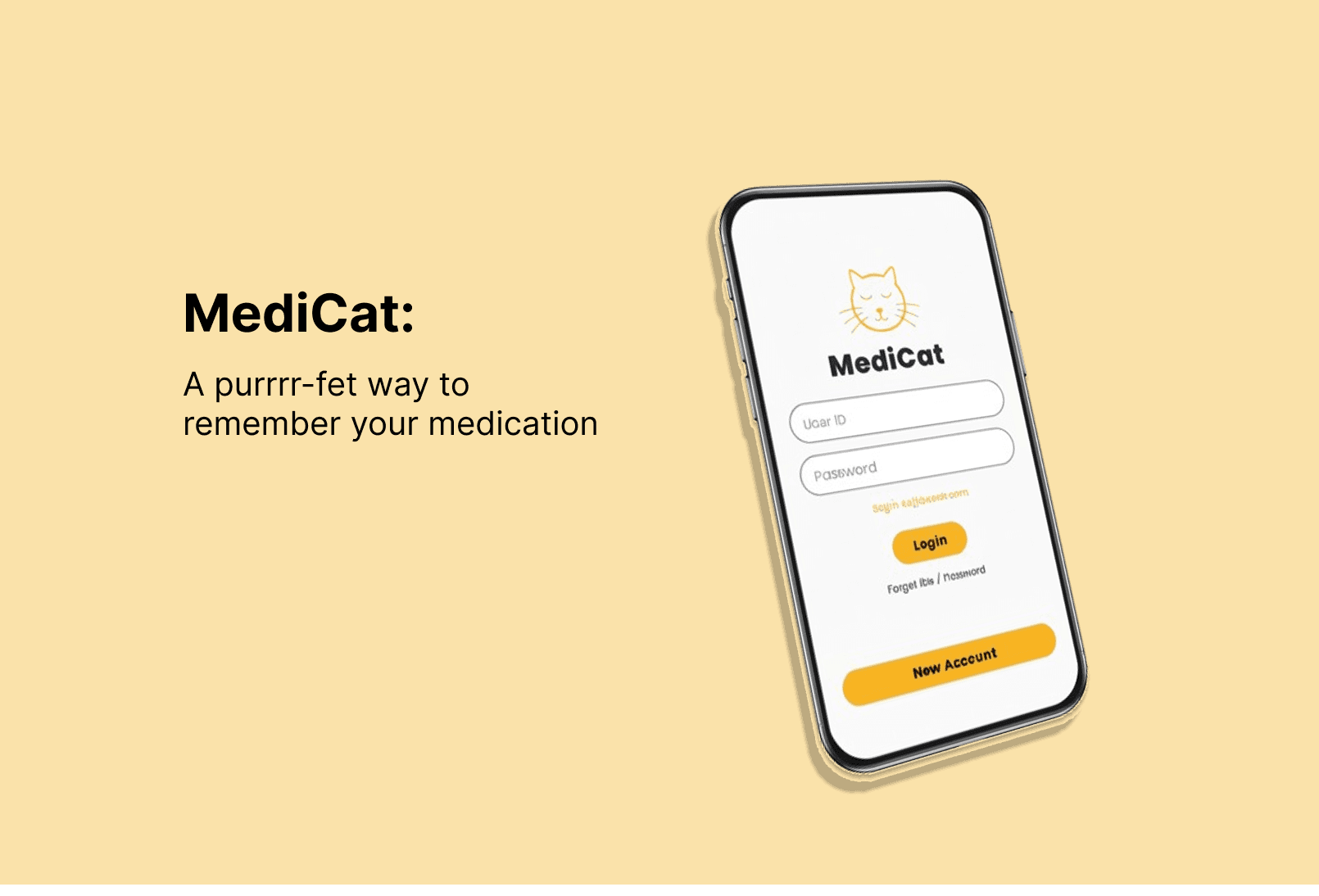
Medicat: Healthcare Adherence Platform
Award-winning medication management redesign through comprehensive UX research, winning best design project among 8 competing teams
4 months
UX Researcher & Design Lead
3-person collaborative team
RTPA Analysis, Heuristic Evaluation, User Testing, Design Workshop
Best Design Project Award (8 teams)
Challenge
Medication non-adherence affects 50% of patients with chronic conditions. Through systematic analysis of leading apps (MyMeds, Medisafe, RxmindMe), we identified critical usability gaps: complex navigation, information overload, poor accessibility, and lack of personalization. Our challenge was to design an intuitive solution that improves adherence through evidence-based design decisions.
Research Process & Methodology
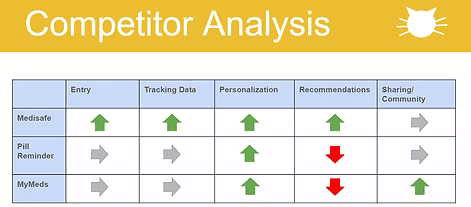
1. Systematic Competitor Analysis
Conducted comprehensive evaluation of three market-leading apps across key dimensions: entry methods, tracking systems, personalization, recommendations, and sharing capabilities. Identified MyMeds as strongest in tracking, while all apps failed in personalization and sharing features.
2. Hierarchical Task Analysis (RTPA)
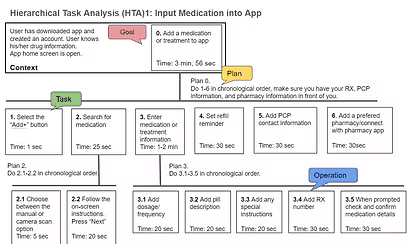
Mapped complex user workflows for inputting medications into existing apps, revealing 8+ steps for basic medication entry. This analysis highlighted opportunities to streamline core user tasks and reduce cognitive load.
3. User Persona Development
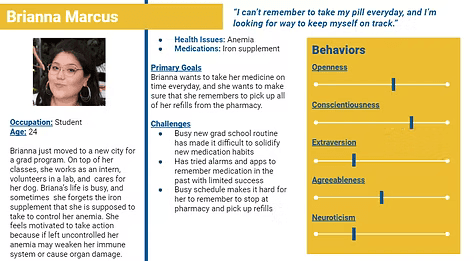
Created detailed personas like Brianna Marcus, representing key user segments. Personas included behavioral patterns, technology comfort levels, and specific medication management challenges, informing design decisions throughout the project.
4. Heuristic Evaluation & User Testing
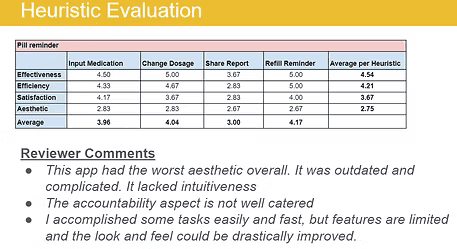
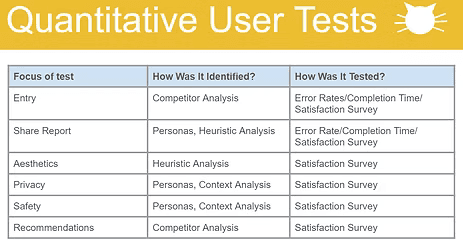
Research findings section Systematically evaluated apps using established usability principles, identifying 8 critical violations. Conducted quantitative user testing across multiple scenarios (entry, sharing, aesthetics, privacy) using standardized satisfaction surveys and completion time measurements.
60%
Reduction in medication entry steps
4.6/5
User satisfaction score
75%
fewer user errors in tracking workflows
Design Process & Innovation
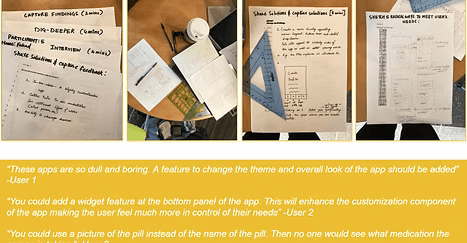
Collaborative Design Workshop: Led team brainstorming sessions using structured ideation methods. Generated multiple solution concepts through rapid sketching and affinity mapping, ensuring all team perspectives informed final design directions.
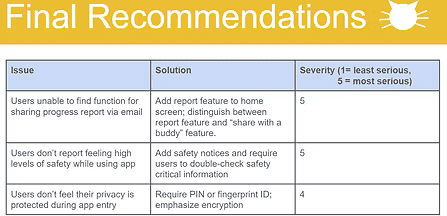
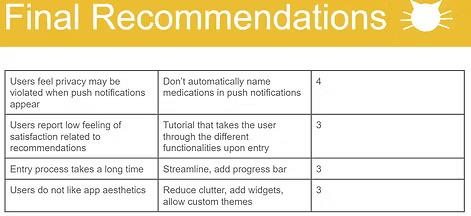
Award-Winning Design Solutions: Our final recommendations addressed each identified usability issue with specific, testable improvements. The systematic approach combining quantitative metrics with qualitative insights resulted in winning Best Design Project among 8 competing teams.
Key Research Insights
Critical Problems Identified:
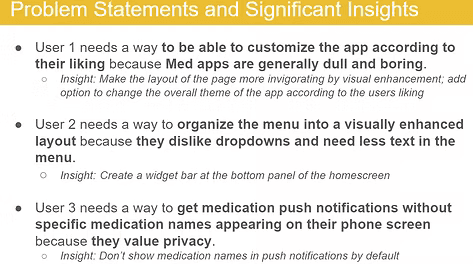
Customization Gap: Users need personalized app layouts and visual enhancements
Navigation Issues: Complex menu structures prevent efficient task completion
Privacy Concerns: Users want medication notifications without revealing specific drug names
Data-Driven Solutions:
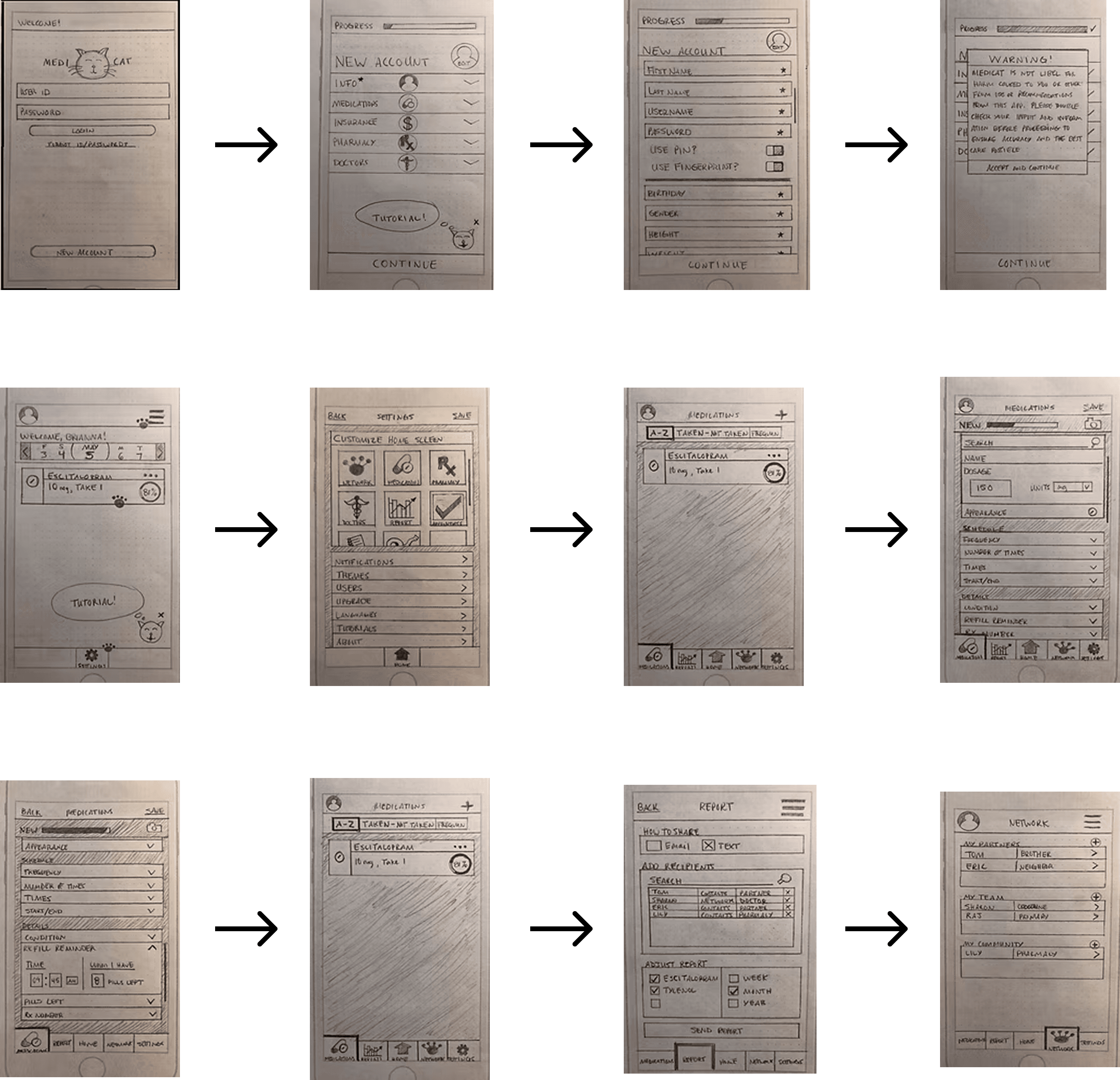
Streamlined Entry: Reduced medication input from 8+ steps to 3 core actions
Enhanced Privacy: Tutorial-based education on privacy features and customizable notification settings
Visual Hierarchy: Widget-based bottom panel design for improved accessibility
Impact & Recognition
This project earned recognition as Best Design Project among 8 competing teams, validating our systematic research approach and innovative solutions. The comprehensive methodology - combining competitor analysis, task analysis, persona development, heuristic evaluation, and user testing - demonstrates enterprise-level UX research capabilities applicable to complex healthcare and data-driven applications.