
Learn Look Locate: Breast Cancer Education Platform
Redesigning critical health information architecture to improve content discoverability and user engagement for a global breast cancer education community
Timeline
6 months
My Role
UX Designer & User Researcher
Team
Web Developer, Offshore Development Team (3), SEO Specialist
Tools
Figma, Miro, Google Analytics, User Interviews, Card Sorting
Focus
Information Architecture, User Research, Cross-functional Collaboration
Challenge
Users visiting Learn Look Locate couldn't quickly understand the platform's purpose or efficiently navigate to specific medical content. With 16+ medical advisors and extensive educational resources, the information architecture needed restructuring to support different user journeys - from newly diagnosed patients seeking urgent information to caregivers researching treatment options.
Key Issues Identified:
Unclear value proposition - Homepage didn't immediately communicate the platform's purpose
Scattered medical expert content - Doctor interviews and expertise were difficult to locate
Poor content hierarchy - No clear path from general education to specific medical guidance
Mobile navigation challenges - Complex menu structure on mobile devices
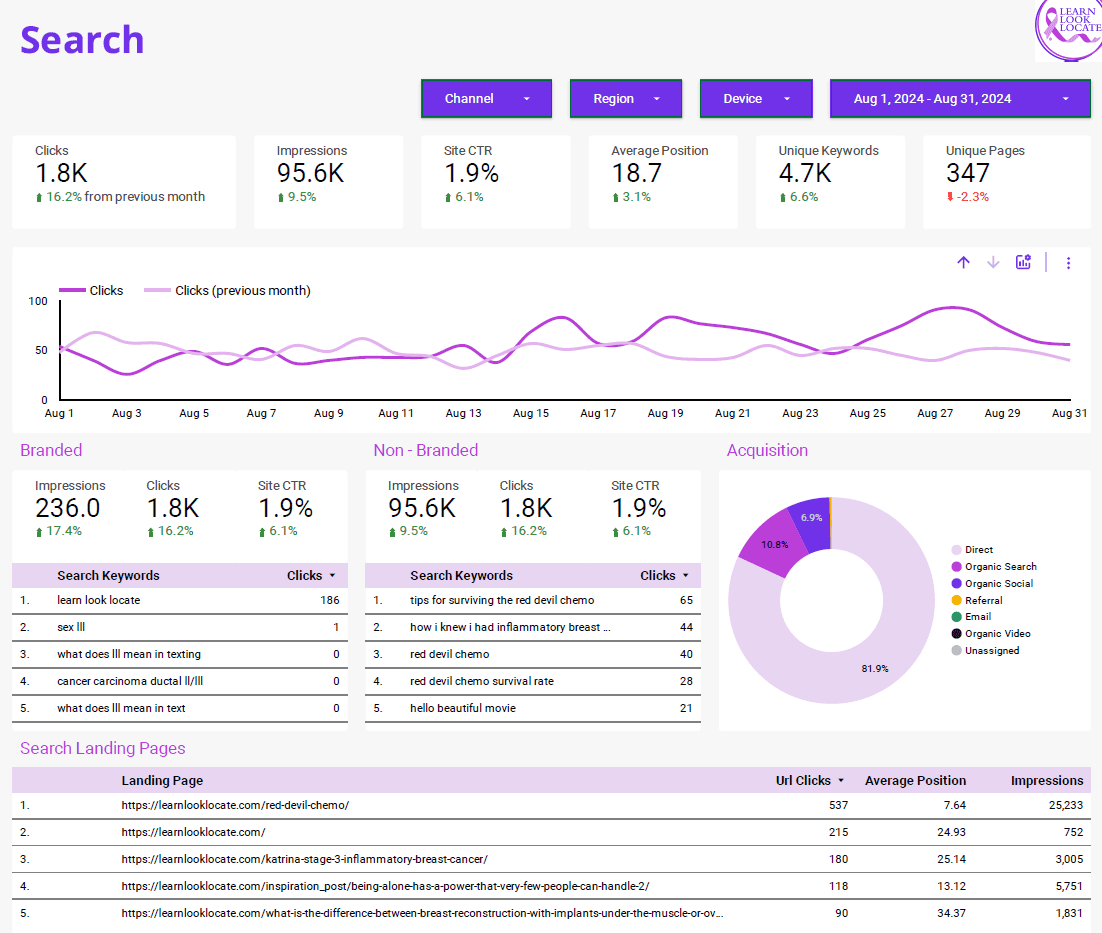
User Research Insights: Through user interviews with 12 breast cancer patients and caregivers, we discovered that 83% struggled to find specific doctor expertise within 3 clicks, and 67% felt overwhelmed by the amount of unorganized medical information.
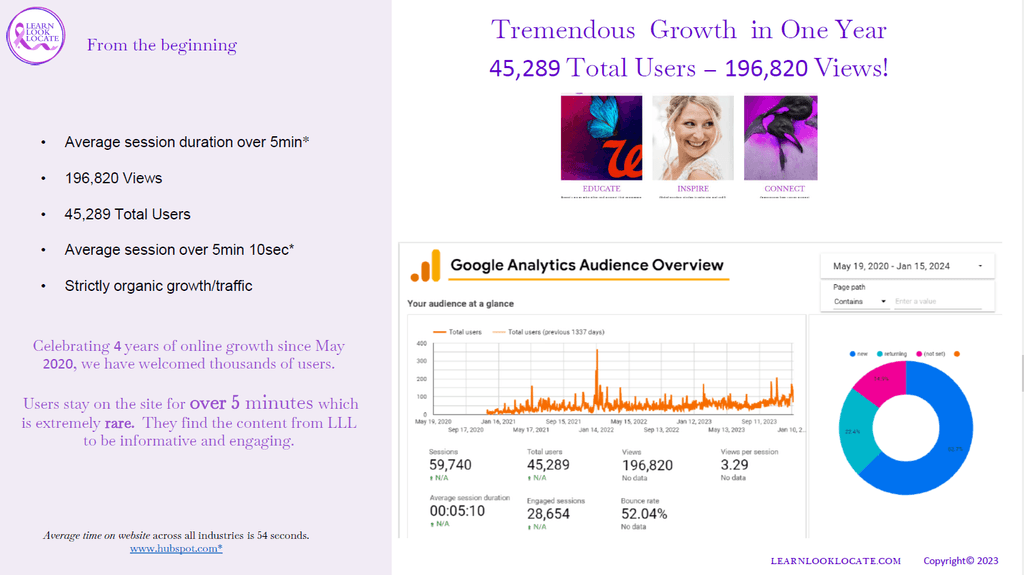
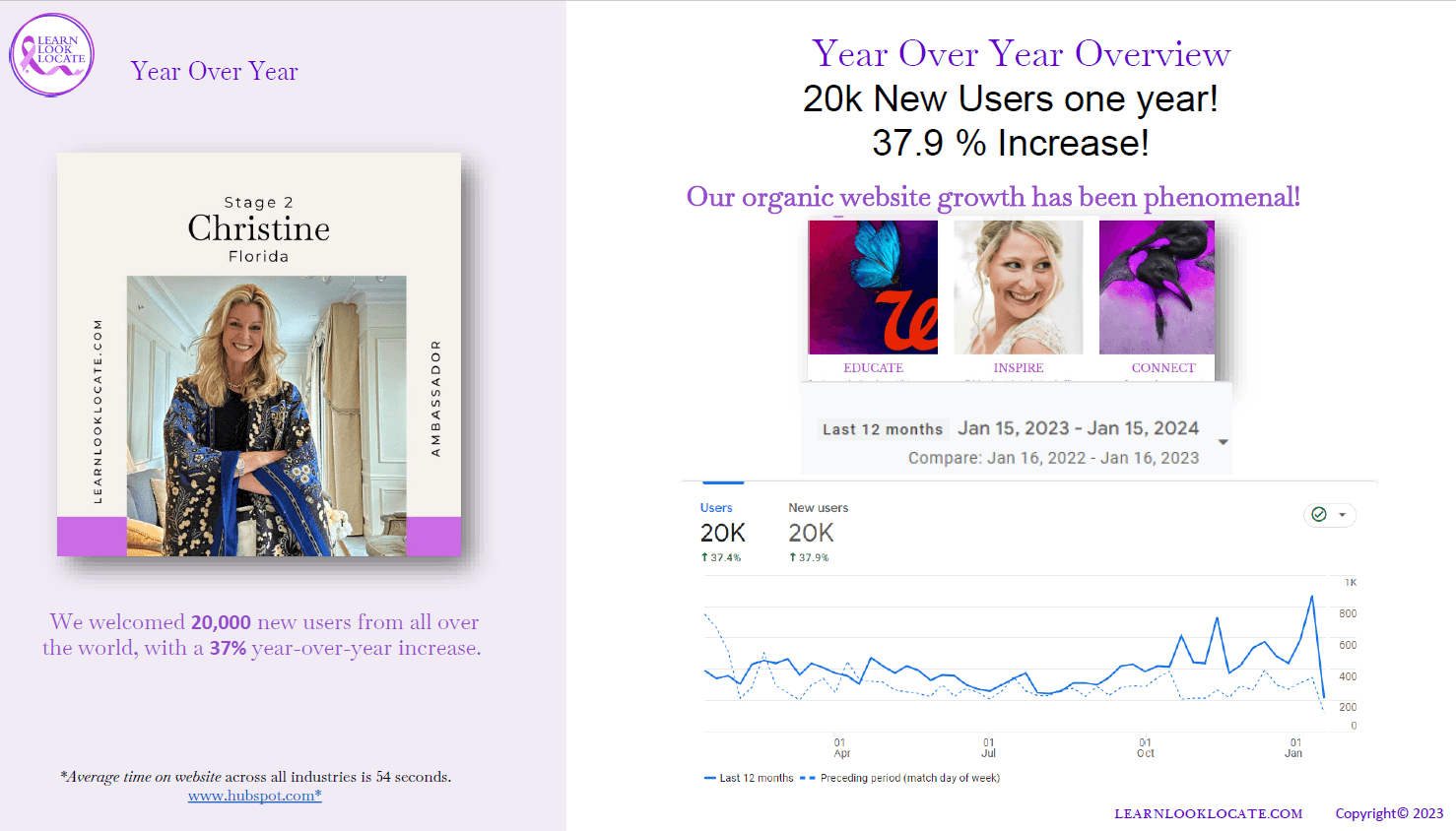
62%
Increase in new users
5+
Minute average session duration
5
Global reach across 5 continents
89%
Mobile traffic optimization
My Approach
1. User Research & Behavioral Analysis
Applied psychology background to understand emotional user journeys during vulnerable health moments. Conducted card sorting with patients to understand their mental models for organizing medical information.
2. Cross-Functional Collaboration
Led design decisions while coordinating with offshore development team across different time zones. Collaborated with SEO specialist to balance user needs with search optimization requirements.
3. Information Architecture
Redesigned content taxonomy for 16+ medical advisors and 100+ educational resources. Created scalable navigation systems supporting both urgent information seeking and research browsing behaviors.
4. Data-Driven Design Validation
Used Google Analytics and user feedback to validate design decisions. Measured impact through engagement metrics and task completion rates.
METRICS
Key Design Solutions
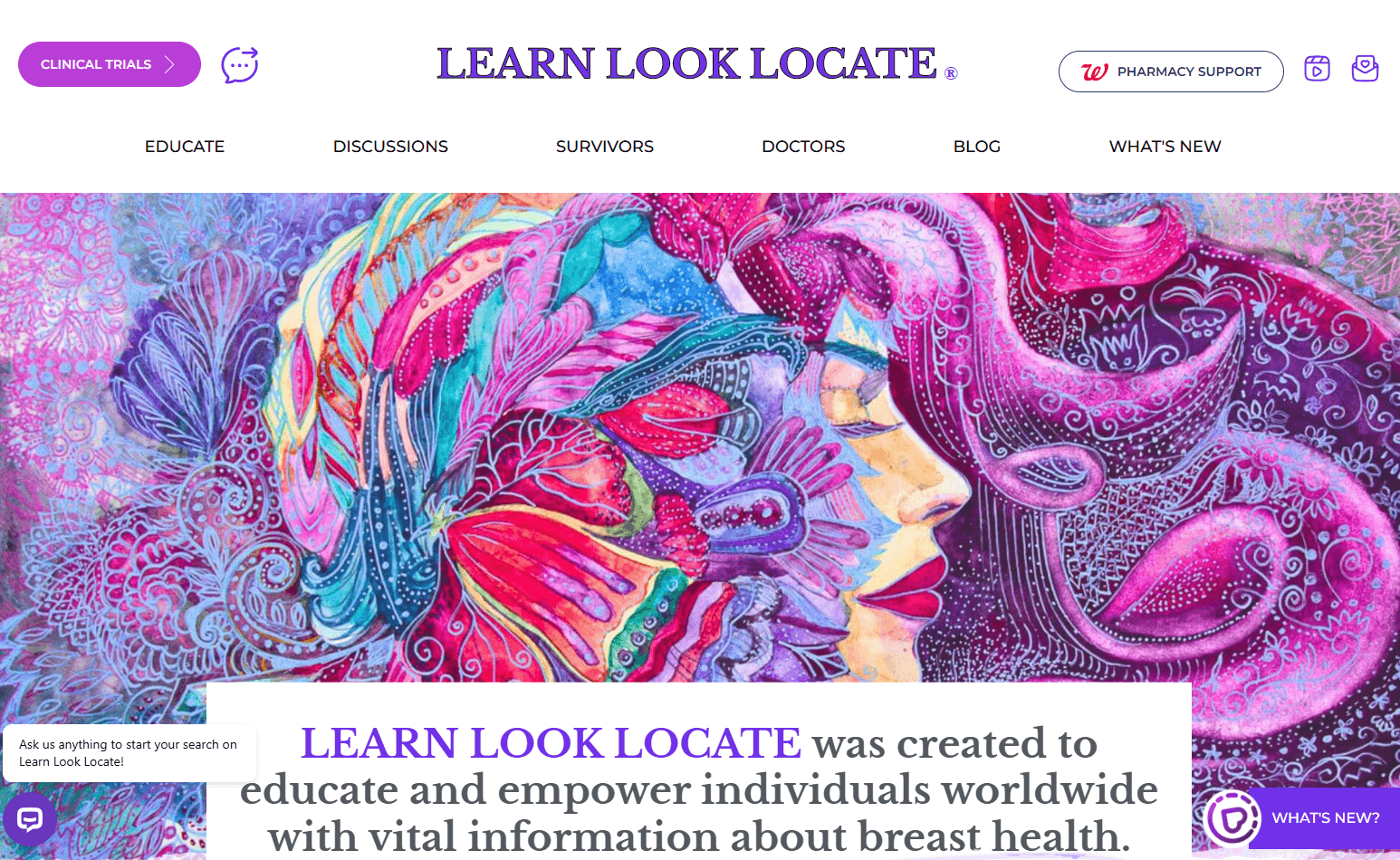
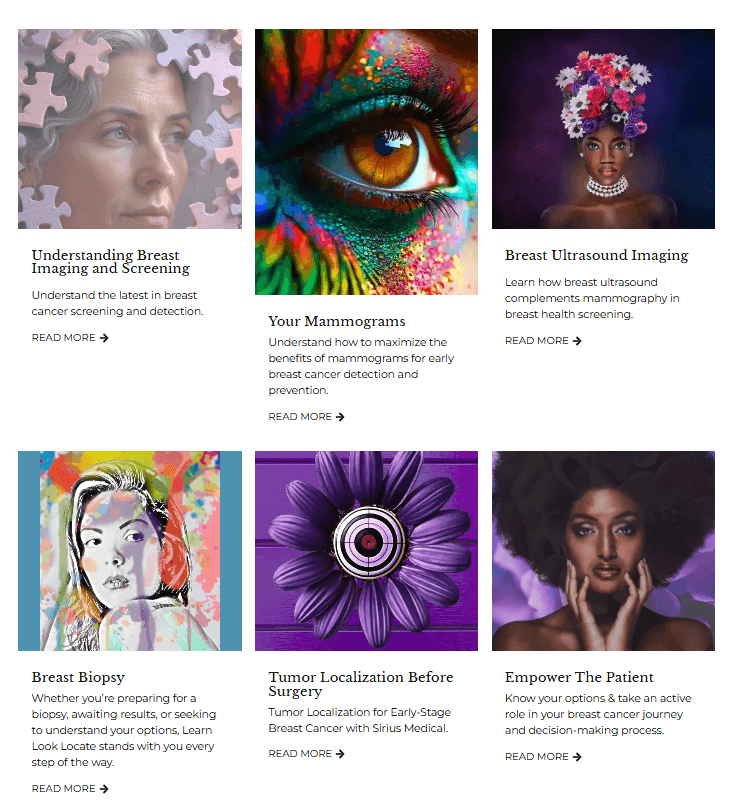
Homepage Transformation Redesigned hero section with clear value proposition: "Learn Look Locate was created to educate and empower individuals worldwide with vital information about breast health." Added immediate access to medical advisors through visual cards.
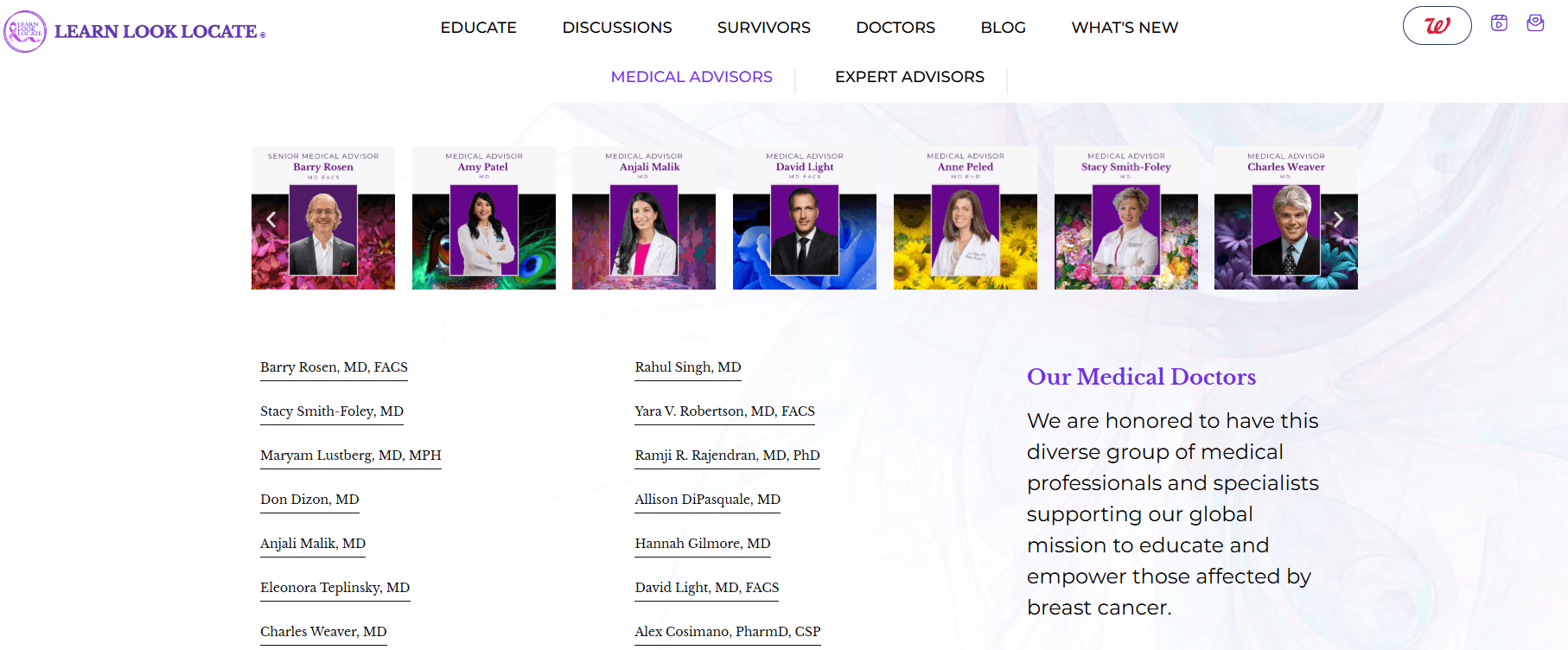
Expert Content Organization Restructured 16+ medical advisor profiles by specialty rather than alphabetical order. Created consistent templates with clear expertise indicators and direct video access, reducing cognitive load for users seeking specific medical guidance.
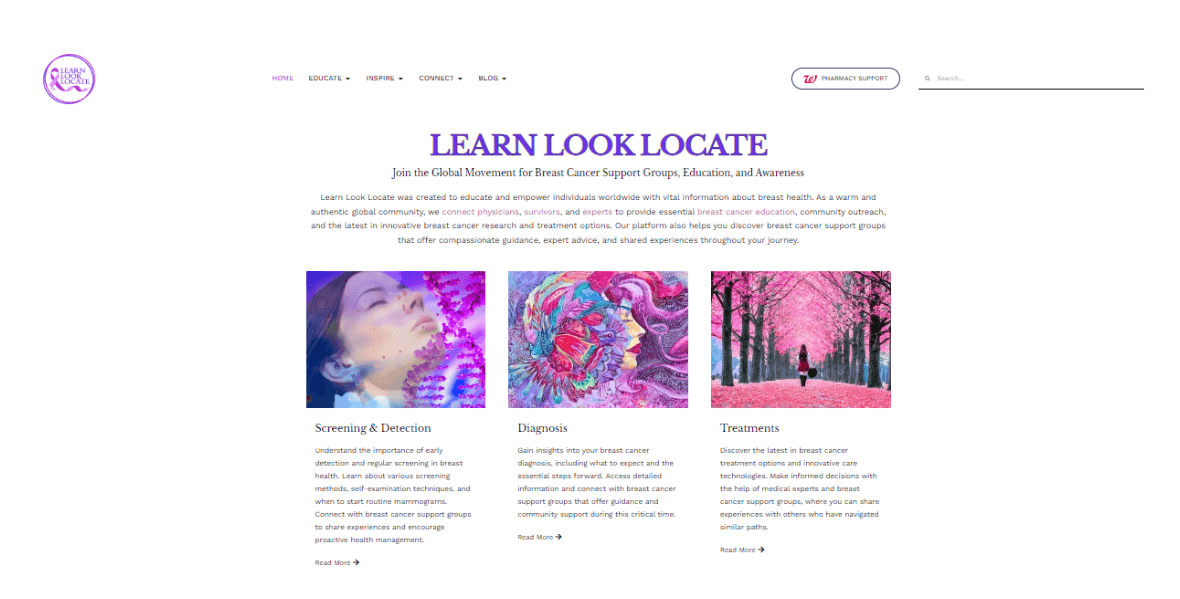
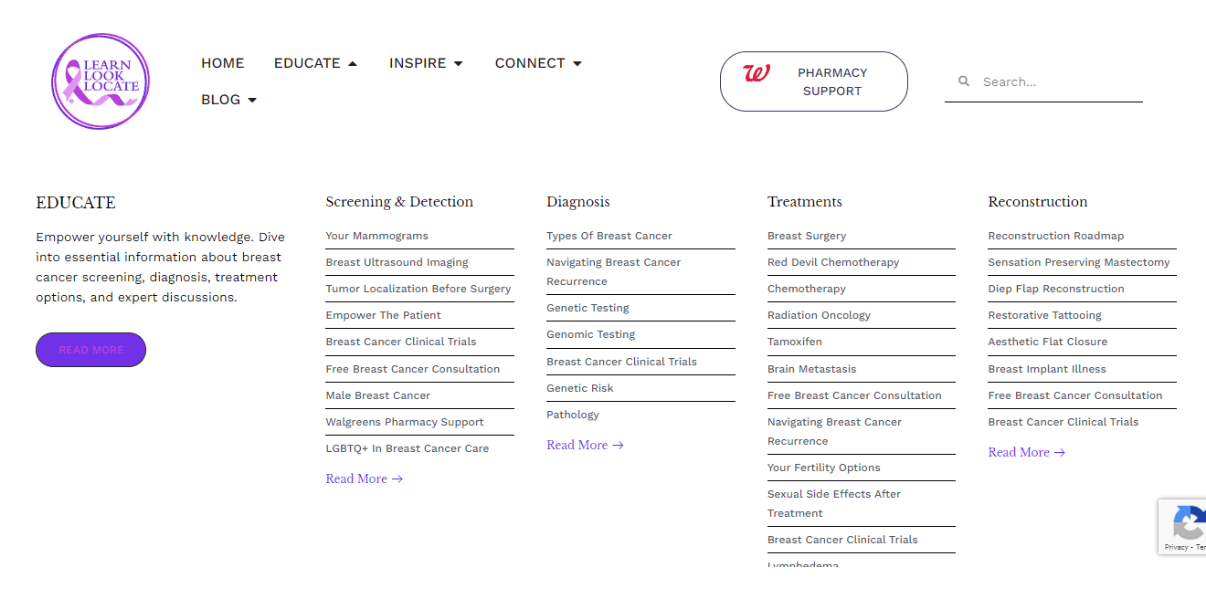
Mobile-First Navigation Simplified complex menu structure from 6+ top-level categories to 4 clear pathways: Educate, Discussions, Survivors, Doctors. Implemented progressive disclosure for treatment subcategories.
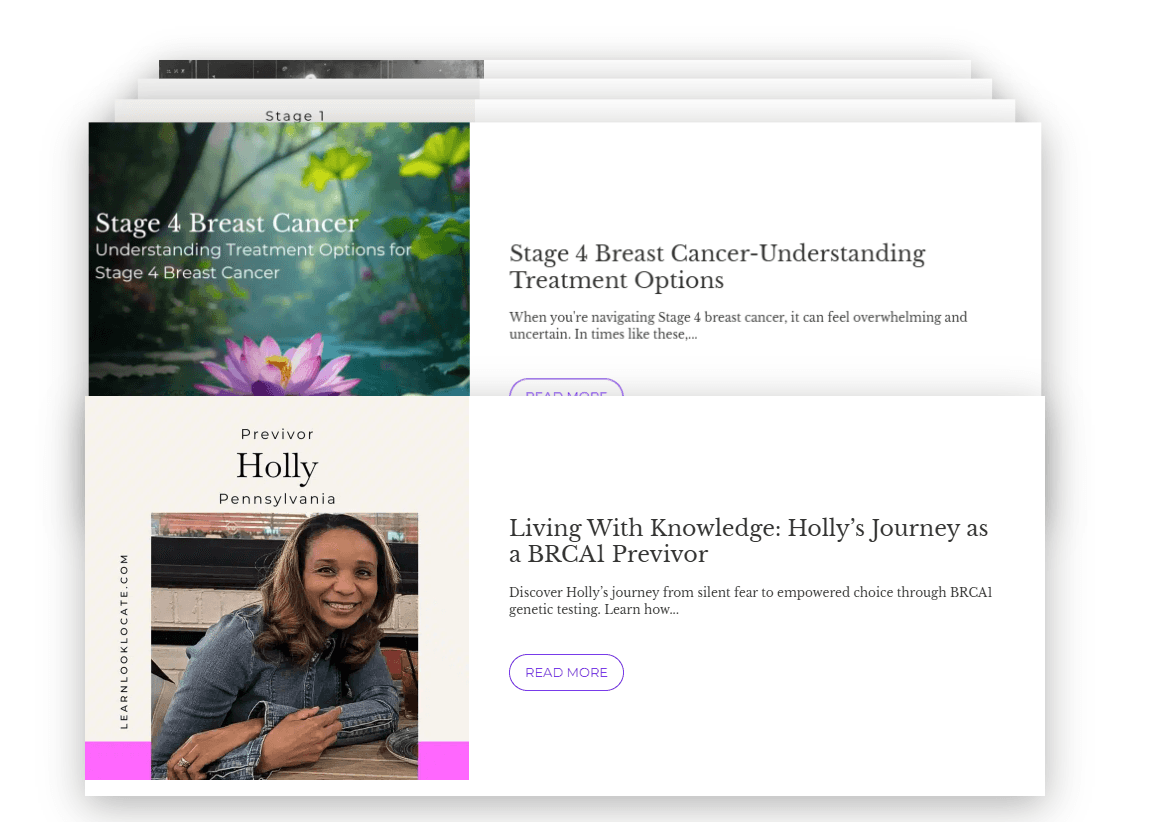
Content Discoverability Reorganized blog and educational content by user journey stage (newly diagnosed, in treatment, survivor) rather than content type, enabling faster access to relevant information during critical moments.
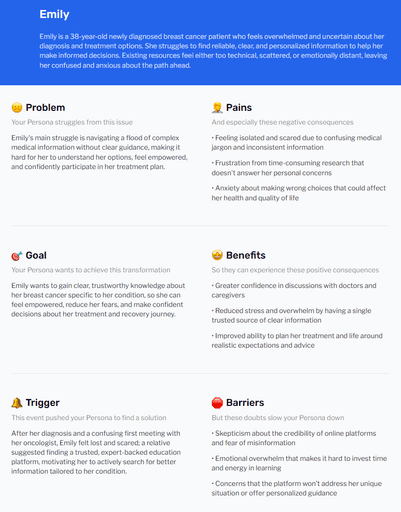
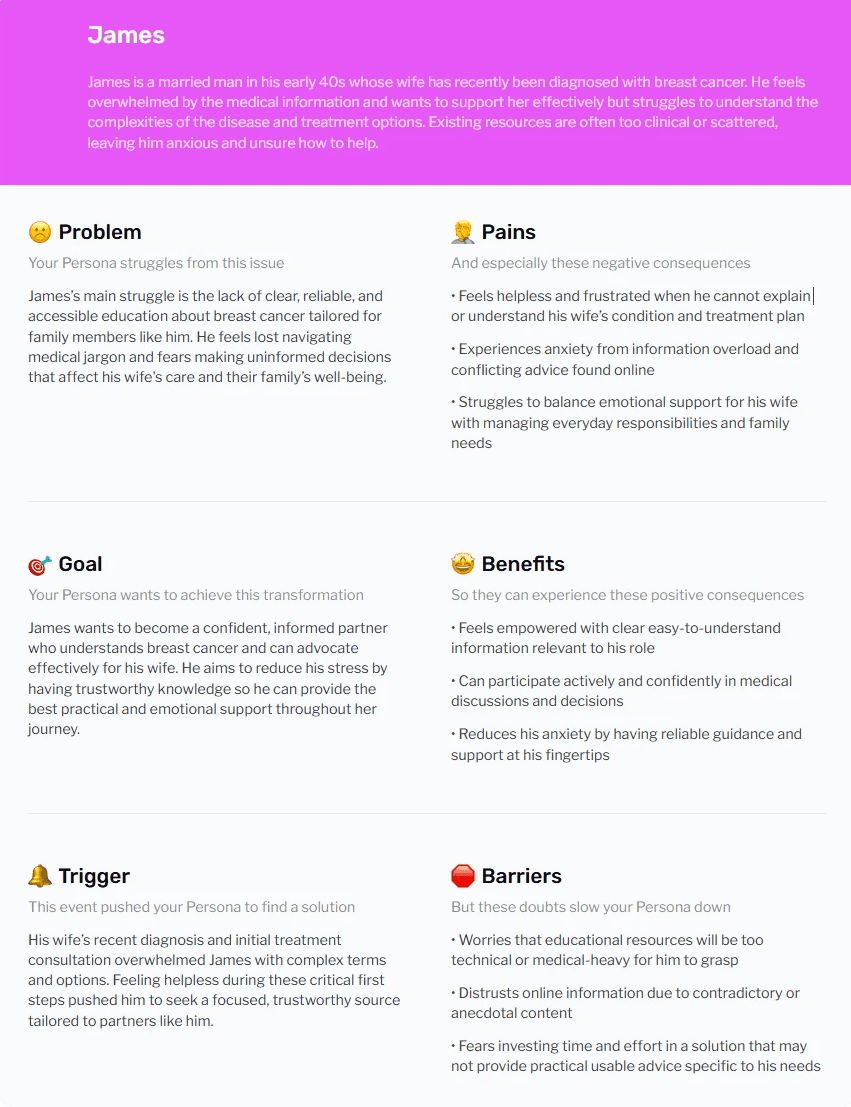
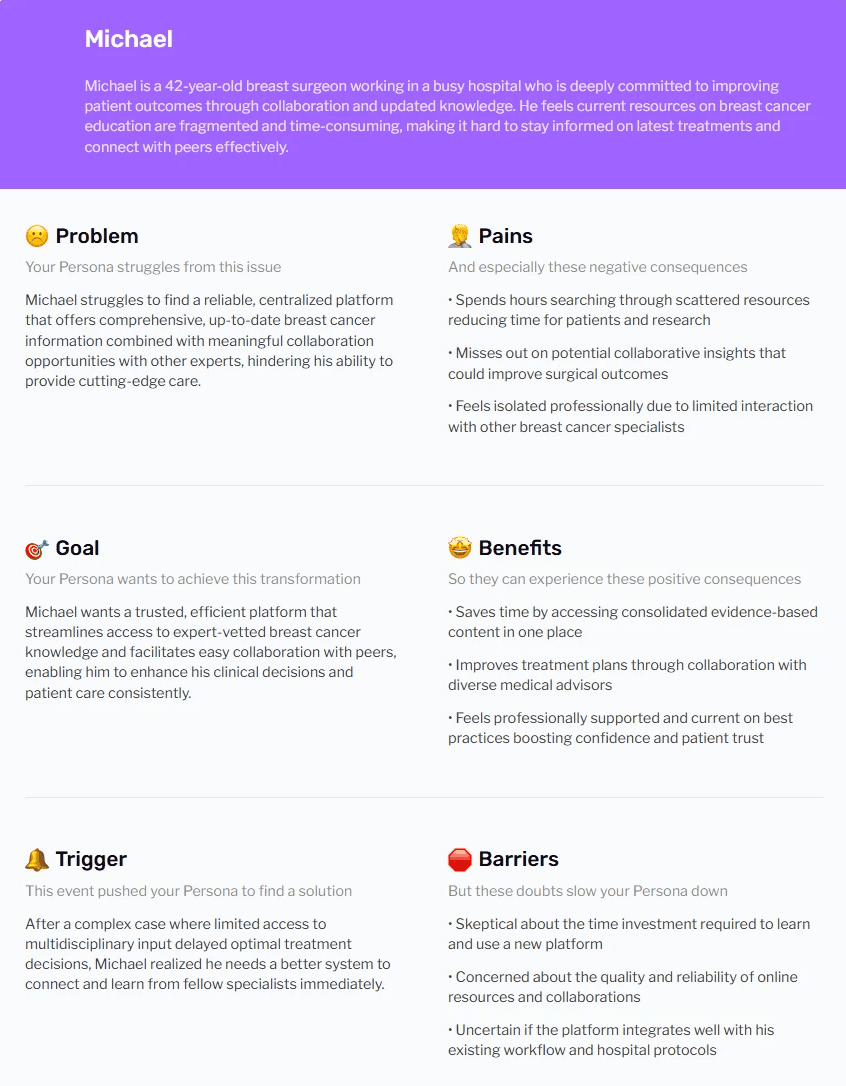
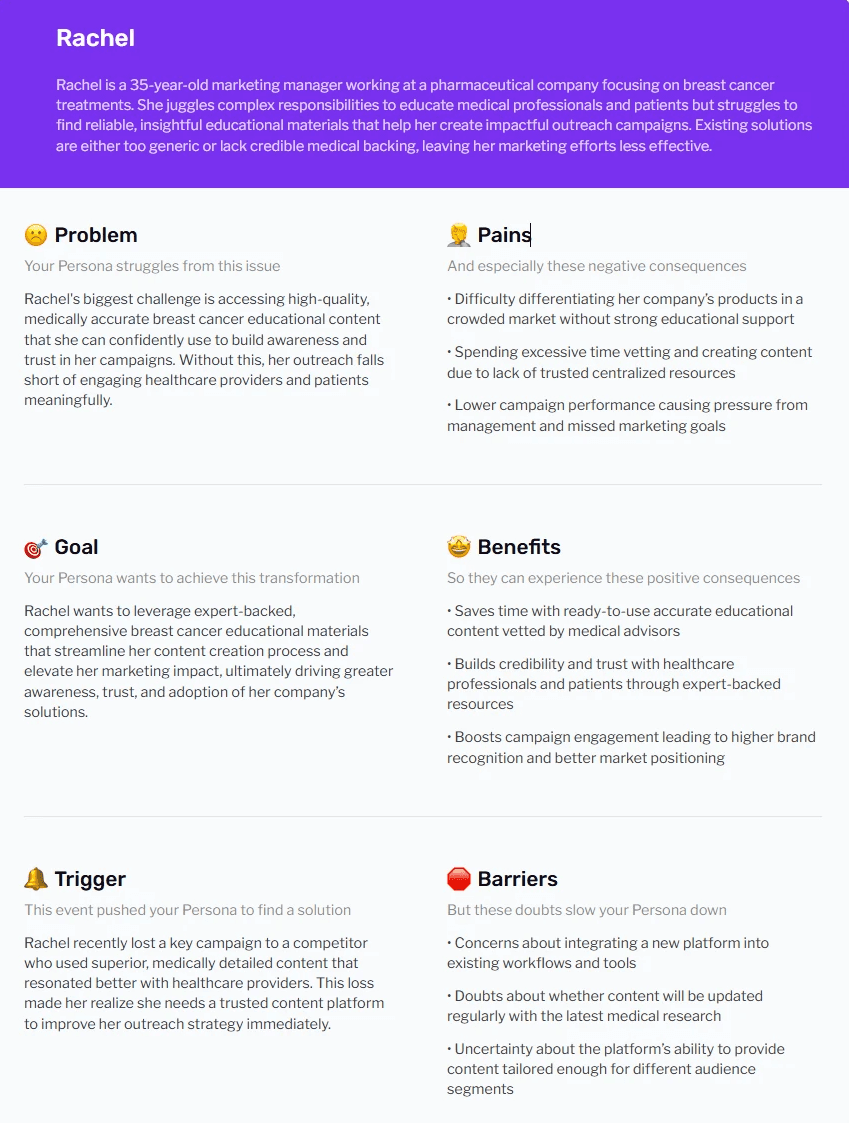
User Personas
Impact & Results
The Learn Look Locate redesign successfully transformed a complex medical information platform into an intuitive, user-centered experience. By applying user research insights and psychology-informed design principles, we created clear pathways for different user needs - from urgent medical information seeking to comprehensive treatment research.
Resume